
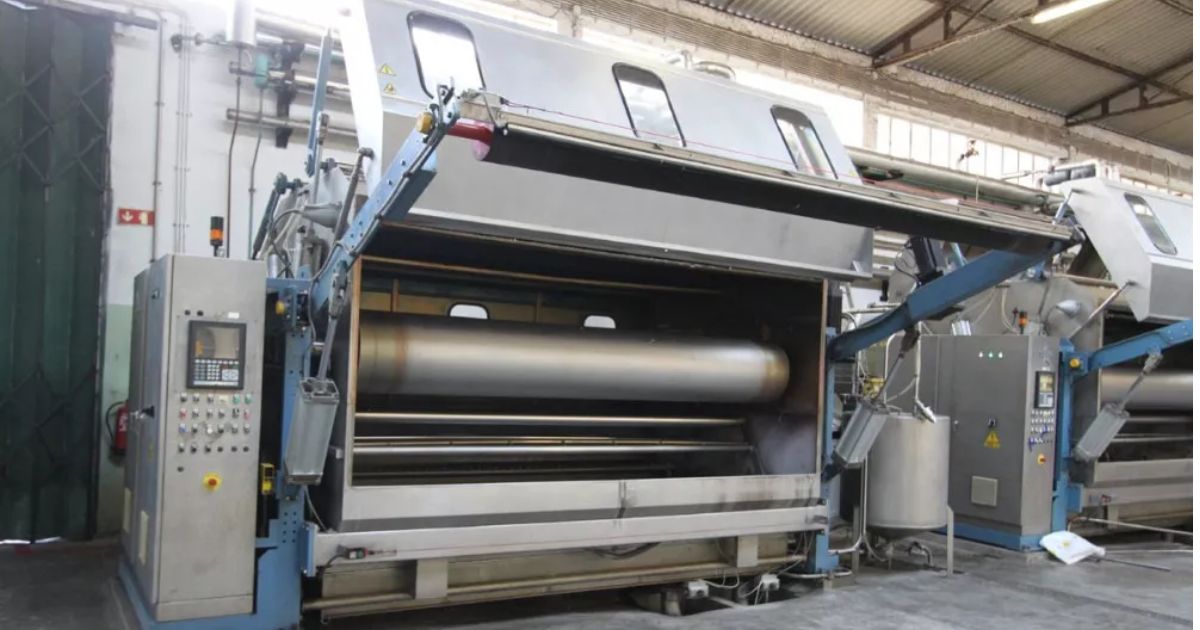
The textile industry relies on a wide range of specialized machinery to achieve consistent, high-quality dye results across different fabric types. Among these machines, the jigger dyeing machine holds a prominent place — valued for its efficiency, versatility, and ability to produce uniform dyeing across woven fabrics. Whether you are a textile manufacturer, a procurement specialist, or simply someone curious about how fabrics get their color, this guide covers everything you need to know about jigger dyeing machines.
What Is a Jigger Dyeing Machine?
A jigger dyeing machine is a batch-type dyeing apparatus used primarily for dyeing woven fabrics in open-width form. Unlike other dyeing systems where fabric is processed in rope form, the jigger processes fabric in its full open width, which significantly reduces the risk of creasing, distortion, or uneven tension — problems that are common with delicate or tightly woven textiles.
In a jigger machine, the fabric is wound back and forth between two rollers — called jig rollers or batch rollers — passing through a trough filled with dye liquor. Each pass of the fabric through the dye bath is called a “pass” or “end”, and the process is repeated until the desired shade depth and dye exhaustion are achieved.
How Does a Jigger Dyeing Machine Work?
The working principle of a jigger dyeing machine is straightforward but highly effective:
- Loading: The fabric is mounted on one of the two rollers in open-width form.
- Dye Liquor Preparation: The dye bath is prepared in the trough at the bottom of the machine, containing dye, water, auxiliaries, and chemicals relevant to the fabric and dye class.
- Fabric Traversal: The fabric unwinds from the first roller, passes through the dye liquor trough, and winds onto the second roller. This is one “end.”
- Reverse Traversal: The direction reverses, and the fabric passes back through the dye bath — this is the second “end.”
- Repetition: The process continues for a set number of ends until the dye is fully absorbed and the desired color depth is reached.
- Washing and Finishing: After dyeing, the fabric undergoes washing, soaping, and finishing steps to remove unfixed dye and improve fastness.
The tension on the fabric can be controlled carefully, making the jigger suitable for fabrics that require gentle handling.
Key Components of a Jigger Dyeing Machine
Understanding the main parts of a jigger dyeing machine helps operators and buyers make informed decisions:
- Jig Rollers (Batch Rollers): Two large rollers that hold and wind the fabric during the dyeing process.
- Dye Trough: The container at the bottom that holds the dye liquor. The fabric passes through this bath with each end.
- Guide Rollers: Smaller rollers that guide the fabric into and out of the dye trough smoothly.
- Heating System: Most jigger machines use steam or electric heating to maintain the dye bath at the required temperature.
- Drive System: An electric motor-driven system controls the speed and direction of the rollers.
- Control Panel: Modern jigger machines feature programmable logic controllers (PLCs) that automate temperature, speed, number of ends, and timing.
- Liquor Level Control: Sensors and valves that maintain a consistent dye liquor level throughout the process.
Types of Jigger Dyeing Machines
Over the years, jigger dyeing technology has evolved considerably. The main types available today include:
1. Atmospheric Jigger Dyeing Machine
This is the basic, conventional jigger that operates at or near atmospheric pressure, with temperatures typically up to 98–100°C. It is suitable for dyeing cotton, linen, and viscose fabrics with reactive, direct, or vat dyes.
2. High-Temperature (HT) Jigger Dyeing Machine
The high-temperature jigger operates under pressurized conditions, allowing the dye bath to reach temperatures of 130–140°C or higher. This makes it ideal for dyeing polyester, nylon, and polyester-cotton blends with disperse dyes, which require elevated temperatures for proper dye penetration.
High-temperature jigger machines are sealed units designed to withstand internal pressure, and they typically feature robust stainless steel construction, advanced sealing mechanisms, and precise temperature/pressure control systems.
3. Fully Automatic Jigger Dyeing Machine
Equipped with PLC-based automation, fully automatic jiggers allow operators to program complete dyeing recipes including temperature ramps, number of ends, dwell times, and chemical dosing. This reduces human error and improves batch-to-batch reproducibility.
4. Eco-Friendly / Low Liquor Ratio Jigger
Modern textile production increasingly demands water and energy efficiency. Low liquor ratio jigger machines are designed to work with significantly reduced volumes of water and chemicals, lowering both operating costs and environmental impact.
Advantages of Using a Jigger Dyeing Machine
The jigger dyeing machine offers several distinct benefits that make it a preferred choice in many textile operations:
- Open-Width Processing: Prevents rope marks, creases, and distortion — critical for woven and structured fabrics.
- Versatility: Compatible with a wide range of fibers (cotton, polyester, silk, wool, blends) and dye classes (reactive, disperse, direct, acid, vat).
- Uniform Dyeing: Consistent fabric tension and controlled dye bath conditions promote level, even dyeing results.
- Relatively Small Footprint: Compared to continuous dyeing ranges, jigger machines require less floor space.
- Suitable for Short Runs: The batch nature of jigger dyeing makes it ideal for small to medium production runs and sample dyeing.
- Simple Operation: The fundamental mechanism is easy to understand and maintain, even for operators with moderate training.
Limitations of Jigger Dyeing Machines
Like any industrial equipment, jigger dyeing machines have certain limitations:
- Batch Process: Jiggers are not continuous machines, which can limit throughput compared to continuous dyeing ranges for very large-scale production.
- Fabric Tension: If not carefully managed, the tension from winding and unwinding can cause elongation or distortion in stretch or knit fabrics (which is why jiggers are generally not recommended for knitted fabrics).
- Liquor Ratio: Traditional jigger machines may use relatively high liquor ratios, increasing water and chemical consumption — though modern designs have addressed this significantly.
Common Applications of Jigger Dyeing Machines
Jigger dyeing machines are used across a broad range of textile segments:
- Woven Fabrics: Shirting, suiting, denim, canvas, upholstery, and technical textiles.
- Piece Dyeing: Dyeing greige fabric after weaving to achieve specific colors.
- Silk and Delicate Fabrics: The open-width, tension-controlled process is gentle enough for fine silk and similar materials.
- Polyester and Blends: High-temperature jiggers are particularly valuable for dyeing synthetic fibers and their blends.
- Industrial and Technical Textiles: Fabrics used in filtration, automotive interiors, and protective clothing.
Important Parameters to Consider When Selecting a Jigger Dyeing Machine
When evaluating a jigger dyeing machine for purchase, consider the following technical and operational parameters:
| Parameter | Typical Range / Consideration |
| Fabric Width Capacity | 1200 mm – 3600 mm |
| Maximum Operating Temperature | 98°C (atmospheric) / 130–140°C (HT) |
| Maximum Operating Pressure | Atmospheric / 3–5 bar (HT models) |
| Fabric Weight Range | Light (30 gsm) to Heavy (800+ gsm) |
| Liquor Ratio | 1:3 to 1:10 depending on model |
| Drive System | Variable frequency drive (VFD) for speed control |
| Construction Material | SS 304 / SS 316 stainless steel |
| Control System | Manual / Semi-automatic / Fully PLC-automated |
| Heating Method | Steam / Electric / Thermic oil |
Maintenance Tips for Jigger Dyeing Machines
Regular maintenance ensures long machine life and consistent dyeing quality:
- Daily Cleaning: Flush the dye trough and guide rollers after each batch to prevent dye contamination.
- Roller Inspection: Check the surface of the jig rollers regularly for roughness or damage that could mark or snag fabric.
- Seal and Gasket Checks (HT models): Inspect pressure seals and gaskets periodically to prevent steam or dye liquor leaks.
- Lubrication: Lubricate bearings and drive components according to the manufacturer’s schedule.
- Control System Calibration: Periodically calibrate temperature sensors, pressure gauges, and liquor level controls to maintain process accuracy.
- Electrical Inspection: Check wiring, contactors, and control panels for signs of corrosion or wear.
Environmental Considerations
The textile dyeing industry faces growing pressure to reduce its environmental footprint. Modern jigger dyeing machines contribute to sustainability in several ways:
- Low Liquor Ratio Designs: Newer jigger models can operate at liquor ratios as low as 1:3 or even lower, dramatically cutting water usage per kilogram of fabric.
- Heat Recovery Systems: Some advanced models incorporate heat exchangers to recover and reuse thermal energy from discharged water.
- Precise Chemical Dosing: Automated dosing systems minimize excess chemical use, reducing effluent load.
- Shorter Process Times: Efficient temperature ramp controls and optimized dyeing programs reduce energy consumption per batch.
Jigger vs. Other Dyeing Machines: A Quick Comparison
| Feature | Jigger | Winch/Beck | Jet Dyeing | Continuous Range |
| Fabric Form | Open width | Rope | Rope / Open width | Open width |
| Best For | Woven fabrics | Knits, loose structures | Knits, synthetics | High-volume production |
| Liquor Ratio | Medium to low | High | Low | Very low |
| Risk of Creasing | Low | Higher | Medium | Low |
| Production Scale | Small to medium | Small to medium | Medium to large | Large |
| Temperature Range | Up to 140°C (HT) | Up to 100°C | Up to 140°C | Varies |
Final Thoughts
The jigger dyeing machine remains a cornerstone of the textile dyeing industry due to its flexibility, gentle fabric handling, and broad compatibility with different fiber types and dye classes. From basic atmospheric models for cotton dyeing to advanced high-temperature, fully automated systems for polyester and blended fabrics, jigger machines offer a reliable solution for achieving consistent, high-quality dyeing results.
For textile mills, garment manufacturers, and dye houses looking to invest in dependable dyeing technology, understanding the operating principles, types, and selection criteria of jigger dyeing machines is an essential first step toward making the right equipment decision.
If you are looking for a high-quality high-temperature jigger dyeing machine, explore the JRHC Series High Temperature Jigger Dyeing Machine for a robust, precision-engineered solution designed for modern textile production demands.
 Asura Scans Editorial Team Rehman