
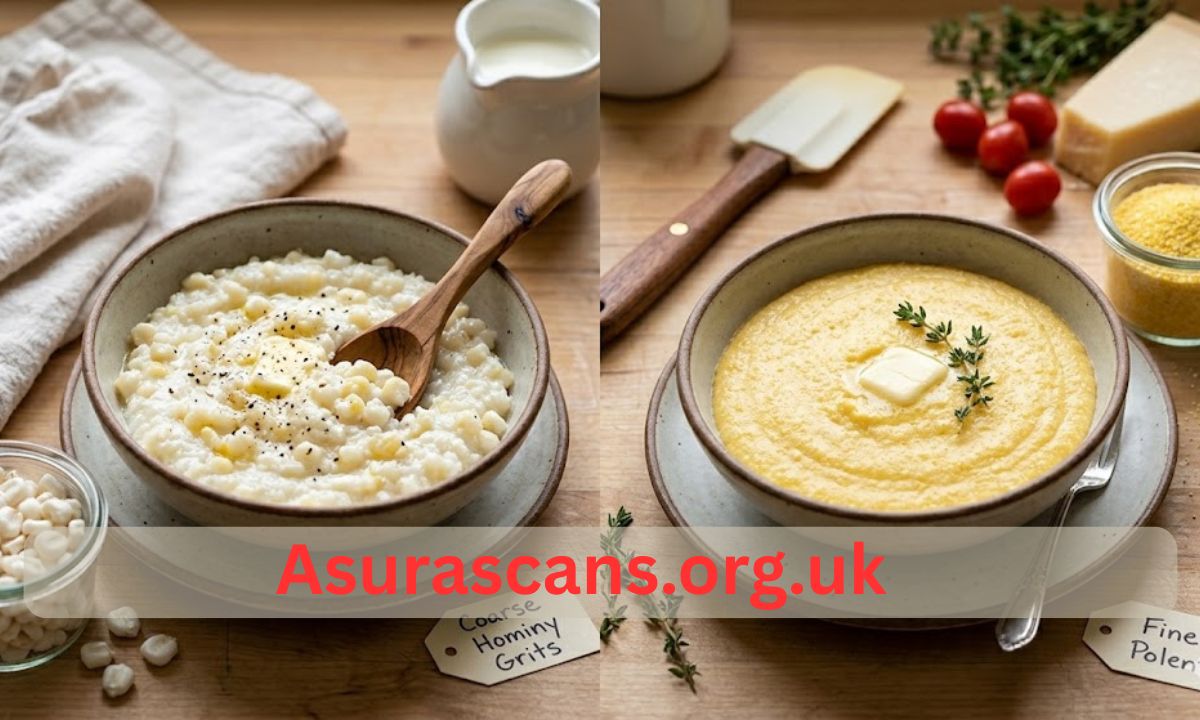
Hominy grits and polenta look similar at first because both are warm, creamy dishes made from corn. They are often served as breakfast, side dishes, or comfort foods, and both can be cooked soft or cooled and sliced. Still, they are not exactly the same. The main difference comes from the type of corn, the way the corn is processed, the texture after cooking, and the food culture behind each dish. Hominy grits are strongly linked with Southern American cooking, while polenta is more closely connected with Italian cuisine. Grits are usually made from dent corn or hominy, while polenta is traditionally made from yellow flint corn, which gives it a slightly firmer bite and deeper corn flavor.
What Are Hominy Grits?
Hominy grits are made from corn that has usually gone through a process called nixtamalization. In simple words, dried corn kernels are soaked in an alkaline solution, such as limewater, which helps loosen the outer hull. After that, the corn is washed, dried, and ground into small coarse pieces. This process changes the flavor, texture, and nutrition of the corn. Hominy grits often have a mild, earthy, slightly nutty taste. When cooked with water, milk, broth, butter, or cheese, they become creamy and soft. They are commonly eaten with eggs, shrimp, bacon, sausage, cheese, or vegetables. The dish is especially popular in the American South, where grits have been part of everyday meals for generations.
What Is Polenta?
Polenta is a traditional Italian corn dish made by slowly cooking ground cornmeal in water, broth, or milk until it becomes thick and smooth. It is usually yellow because it is commonly made from yellow corn, especially flint corn in traditional Italian cooking. Polenta can be served soft like porridge, or it can be poured into a pan, cooled, sliced, grilled, baked, or fried. This makes it very flexible in cooking. Soft polenta is often served with meat sauces, mushrooms, cheese, roasted vegetables, or stews. Compared with grits, polenta usually has a firmer and slightly grainier texture, depending on the grind. It is less connected with breakfast and more often used as a lunch or dinner base in Italian-style meals.
Hominy Grits vs Polenta: Main Differences
The biggest difference between hominy grits and polenta is the corn and processing method. Hominy grits are often made from corn treated with an alkaline solution, while polenta is usually made from ground yellow corn that has not gone through the same hominy process. Grits are generally softer and creamier after cooking, especially when made with milk, butter, or cheese. Polenta is often thicker and can hold its shape better when cooled. Another difference is flavor. Hominy grits have a mild, mellow taste that easily absorbs butter, cheese, broth, or seasonings. Polenta has a stronger corn flavor and works well with savory toppings such as tomato sauce, mushrooms, parmesan, or braised meat. In culture, grits belong mostly to Southern American food, while polenta belongs mostly to Italian and European food traditions.
What Is Better, Grits or Polenta?
Neither grits nor polenta is automatically better. The better choice depends on how you want to use it. If you want a soft, creamy, comforting breakfast or a Southern-style dish like shrimp and grits, hominy grits are usually the better option. They work well with butter, cheese, eggs, seafood, and breakfast meats. If you want a firmer side dish for dinner, something that can be grilled, baked, sliced, or served under a rich sauce, polenta may be better. Polenta also has a slightly stronger corn taste, which makes it a good base for Italian-style meals. In terms of cooking style, grits feel more relaxed and homestyle, while polenta feels more structured and dinner-friendly. The real answer is simple: grits are better for creamy Southern comfort meals, and polenta is better for firm, savory Italian-style dishes.
Is Polenta Okay for Diabetics?
Polenta can be eaten by some people with diabetes, but portion size and meal balance matter. Polenta is a carbohydrate food, and carbohydrate foods can affect blood glucose levels. That does not mean polenta is forbidden, but it should be eaten carefully. A better way to serve it is in a small portion with lean protein, healthy fat, and non-starchy vegetables. For example, a small bowl of polenta with grilled chicken and vegetables is usually a more balanced meal than a large bowl of polenta with butter, cheese, and no protein. The American Diabetes Association’s plate method suggests keeping carbohydrate foods to about one-quarter of the plate, which can help reduce large blood sugar spikes after meals.
Which Is Healthier, Grits or Hominy?
This question can be confusing because grits and hominy are closely related. Hominy is the treated corn, while grits are often made from ground corn or ground hominy. Plain hominy may offer more natural corn texture and may be less processed than instant grits. On the other hand, enriched grits can contain added nutrients such as iron and B vitamins, depending on the product. The healthiest choice depends more on the full meal than the name on the package. Plain stone-ground grits or hominy served with vegetables and lean protein can be a healthy meal. Instant grits loaded with butter, salt, bacon, and cheese can quickly become high in sodium and saturated fat. For better nutrition, choose less processed versions, control the portion, and avoid turning the dish into a heavy, high-fat meal.
What Country Eats the Most Grits?
Grits are most strongly associated with the United States, especially the Southern United States. There is no widely used global ranking that clearly proves which country eats the most grits, but culturally and historically, the United States is the main country known for grits. In the South, grits are eaten at breakfast, lunch, and dinner. They appear in home cooking, diners, seafood restaurants, and traditional dishes like shrimp and grits. The dish has deep roots in Native American corn preparation and later became a major part of Southern food culture. So, if someone asks which country eats the most grits, the practical answer is the United States, with the American South being the strongest grits-eating region.
Texture and Cooking Differences
Texture is one of the easiest ways to understand hominy grits vs polenta. Grits usually cook into a smooth, creamy, spoonable dish. They are often stirred with butter, cream, milk, or cheese to create a soft texture. Stone-ground grits may take longer to cook but usually have better flavor and texture than instant versions. Polenta can also be creamy, but it is often cooked thicker. Once cooled, polenta becomes firm enough to slice. This makes it useful for grilling, pan-frying, layering, or baking. If you want a soft breakfast bowl, grits may feel more natural. If you want a firm base for sauce or roasted vegetables, polenta may be more useful. Both need slow cooking and regular stirring for the best result.
Taste Differences
Hominy grits have a gentle corn flavor with a slightly earthy taste, especially when made from true hominy. Their mild flavor is one reason they pair so well with strong ingredients like sharp cheddar, shrimp, sausage, hot sauce, black pepper, and rich broth. Polenta has a more noticeable corn flavor, especially when made from good-quality yellow cornmeal. It can taste sweet, nutty, and rustic. Because of this, polenta pairs well with parmesan, tomato sauce, mushrooms, beef stew, roasted garlic, herbs, and olive oil. Grits absorb flavor like a soft base, while polenta often brings more of its own corn character to the plate.
Can You Substitute Grits for Polenta?
Yes, you can substitute grits for polenta in many recipes, but the result will not always be identical. If a recipe needs a creamy corn base, grits and polenta can often replace each other. For example, soft polenta can work in place of grits under shrimp or vegetables, and grits can work in place of polenta under a stew. However, if the recipe depends on firm slices, polenta may work better because it sets more firmly when cooled. Grits can be sliced after cooling too, but they may be softer depending on the grind and cooking liquid. When substituting, look at texture first. Use coarse grits for a more rustic result and finer cornmeal for a smoother dish.
Best Ways to Serve Hominy Grits
Hominy grits taste best when cooked slowly and seasoned properly. Water works, but broth or milk can give more flavor. Butter, cheese, black pepper, garlic, and a small amount of salt can make them richer. For a classic Southern-style meal, serve them with shrimp, eggs, sausage, or greens. For a lighter version, use grilled vegetables, mushrooms, spinach, or beans. Avoid relying only on heavy cream, bacon, and cheese if you want a healthier bowl. The goal is to keep the creamy comfort while adding protein and fiber so the meal feels complete.
Best Ways to Serve Polenta
Polenta is excellent as a base for savory toppings. Soft polenta works well with roasted vegetables, chicken, fish, mushrooms, tomato sauce, or parmesan. Firm polenta can be cooled, cut into squares, and grilled or pan-fried until crisp outside and soft inside. This makes it useful as a bread-like side dish without using wheat. Polenta can also be baked in layers with sauce and cheese. For a balanced meal, pair it with protein and vegetables instead of eating a large bowl by itself. This keeps the dish satisfying without making it too heavy.
Final Thoughts
Hominy grits and polenta are both simple corn-based foods, but they are shaped by different traditions, textures, and cooking styles. Hominy grits are softer, creamier, and closely tied to Southern American meals. Polenta is usually firmer, more strongly connected to Italian cooking, and works well as both a soft dish and a sliceable base. Grits may be better for breakfast and comfort food, while polenta may be better for dinner plates, sauces, and grilled dishes. For health, neither one is automatically good or bad. The better choice depends on portion size, toppings, cooking method, and what you eat with it. Plain, balanced servings of either can fit into a healthy diet, while oversized portions with too much butter, cheese, or salt can make either dish less healthy.