
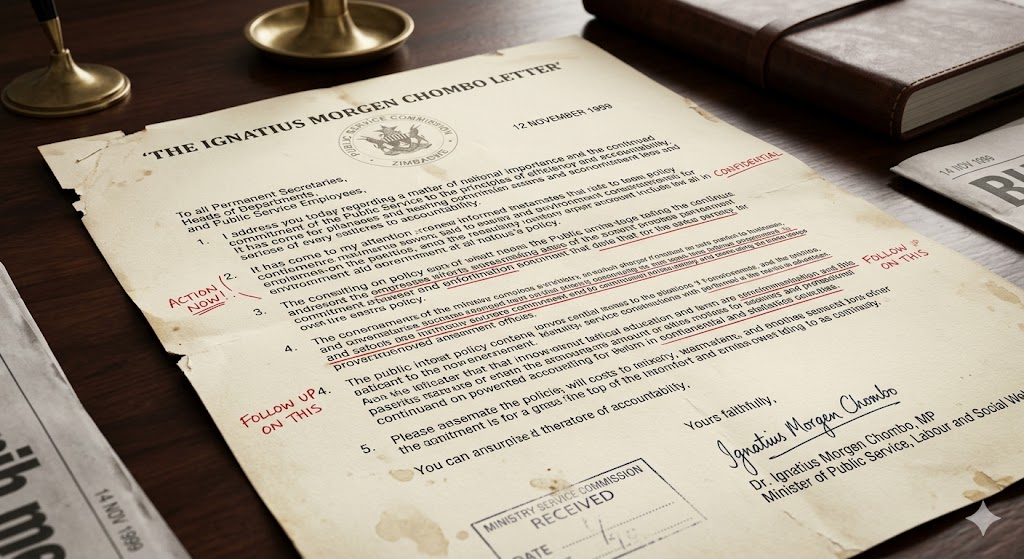
Ignatius Morgen Chombo, a former Zimbabwean cabinet minister, has found himself at the center of various controversies over the years. His political career, marked by influence and power, has also been accompanied by numerous legal battles. One of the most notable pieces of correspondence during his tenure is a letter addressed “to the attention of Mr. Tomana,” which has attracted considerable attention for the details it reveals about the transfer of assets, legal issues, and family matters. This article delves into the contents of the letter, the assets mentioned, and the broader context surrounding its contents.
Understanding the Context of the Letter
In this letter, Chombo makes specific requests regarding the transfer of various assets to a series of individuals, many of whom are members of his extended family. The letter also outlines the transfer of shareholding in a business entity and an extensive family trust. While these instructions are legally binding, they raise questions about the transparency and fairness of such transfers, especially in the context of Chombo’s political background.
Chombo’s request for the transfer of assets is not merely a simple matter of family inheritance. It speaks to his wealth, influence, and the consolidation of power within his family structure. The individuals mentioned in the letter include family members and trusted associates, pointing to the strategic importance of maintaining control over his financial empire.
The Details of the Asset Transfers
The letter begins by requesting the transfer of a variety of assets to different individuals, each one carefully named with their respective property details:
- Enock Masimbaashe: A prominent figure in Chombo’s network, he is to receive a Benz 320 along with property at House No. 79 West Road, Avondale West, Harare.
- Tafadzwa Rugara: A flat located at B320, Odzi Court, Eastview Gardens, Harare is to be transferred along with unspecified assets.
- Dylan Chombo: Chombo’s own family member is to receive a property located at San Sebastian Flat, Cnr Tongogara/6th Street.
- Dr. I Chombo: Another family member, Dr. Chombo, is to receive property at Flat B319, Odzi Court, East View Gardens, Harare.
- Nimrod Gilford Chombo: This individual is set to receive a range of assets, including a Volvo, business stands in Norton, Chishawasha, and Chinhoyi, along with residential stands and Chelsea Flats.
- Ignatius Morgen Chiminya Chombo Jnr: Chombo’s son is to receive several key assets, including business stands in Norton, Banket, and Chishawasha, as well as Chelsea Flats, a block of four units.
- Marian Chombo: In a notable stipulation, Marian, Chombo’s ex-wife, is to receive several properties including Greendale House, Glenview 1 House, and a Land Cruiser. Interestingly, the letter specifies that the transfer of these assets is to be directed into her son’s trust.
Each of these transfers reveals Chombo’s intricate web of family ties, business interests, and the strategic manner in which he intended to manage his estate. The specifics of the assets—ranging from properties in Harare to vehicles and business stands—underscore Chombo’s wealth and his attempt to secure it within his family’s hands.
Chombo Family Trust: The Central Mechanism
One of the most significant elements of the letter is the establishment of the Chombo Family Trust, which is central to the instructions. The letter specifies that the following assets should be transferred into this family trust:
- 100% Shareholding of Growfin Investments: Growfin Investments, which is described as Chombo’s major investment vehicle, is to be fully transferred into the Chombo Family Trust. This move is a clear indication of Chombo’s desire to consolidate control over his business interests and to ensure that his wealth remains firmly under family control.
- Allan Grange Farm: The letter also addresses a contentious issue involving Allan Grange Farm. The farm has been the subject of a legal dispute between Chombo and his first wife, Marian. Despite this, the letter outlines that the farm should be transferred into the Chombo Family Trust, thus shifting ownership away from individual control and into the broader trust structure.
By directing these assets into the family trust, Chombo is ensuring that both his immediate family and future generations maintain influence over the key financial assets that sustain his wealth and legacy. The trust effectively centralizes control and provides a level of protection for his assets, shielding them from potential legal or political challenges.
The Legal and Political Ramifications
The instructions laid out in the letter carry significant legal and political implications. The transfer of assets to family members and the Chombo Family Trust raises important questions regarding the fairness of such actions. Given Chombo’s status as a prominent politician, his actions cannot be seen in isolation from the broader political and economic context of Zimbabwe.
Chombo’s political career has been marked by both influence and controversy. He held several key positions, including Minister of Local Government, Public Works, and National Housing, during Zimbabwe’s era of economic decline and political turmoil. His family’s involvement in his business dealings and asset transfers suggests that political power often intersects with personal wealth, creating a complex dynamic of influence, control, and governance.
Moreover, the transfer of 100% ownership of Growfin Investments into a family trust raises concerns about the opacity of such decisions. While it is legal for individuals to place assets in trusts, the question arises as to whether these actions were carried out transparently and with due diligence. It is also important to consider whether this consolidation of wealth within the family was done in compliance with Zimbabwean laws on asset ownership and the redistribution of land, especially given the contentious history of land reforms in the country.
Family Matters: The Role of Marian Chombo
An interesting aspect of the letter is the inclusion of Marian Chombo, Ignatius’s ex-wife, and the assets that are earmarked for her. While their divorce has been public knowledge, it is clear from the letter that Marian continues to play a significant role in Chombo’s financial dealings. The decision to transfer properties like Greendale House and a Land Cruiser into Marian’s name, and further specify that these assets be transferred into her son’s trust, highlights the ongoing financial relationship between Chombo and his ex-wife.
This move raises questions about the dynamics of divorce settlements and post-divorce financial arrangements in Zimbabwe. The fact that Chombo still has considerable control over Marian’s assets after their separation adds another layer of complexity to the family’s financial affairs. It may also suggest that Chombo is seeking to maintain a sense of unity and control within the family, even after personal and marital challenges.
The Broader Implications for Zimbabwe’s Political Elite
The letter sheds light on the way political elites in Zimbabwe have historically intertwined their personal and business interests. The consolidation of wealth and power within a small group of individuals and families is not unique to Chombo. Many politicians in Zimbabwe have similarly structured their estates and business dealings, using their political influence to secure economic advantages for themselves and their families.
This practice of transferring assets to family members and trusts is reflective of a broader trend in Zimbabwe’s political landscape, where political figures often protect their wealth through strategic family arrangements. Such practices, while not inherently illegal, can fuel public perceptions of inequality and the lack of transparency in the management of national resources.
Conclusion: The Chombo Legacy and Future Implications
The Ignatius Morgen Chombo letter serves as both a window into the world of Zimbabwean political elites and a reflection of the complexities that arise when personal wealth, politics, and family intersect. Chombo’s attempt to consolidate his assets within his family and the Chombo Family Trust highlights the importance of family in securing wealth, but it also raises significant legal and ethical concerns. The transfer of assets to his family members, especially in the context of his political power, underscores the close ties between political influence and personal finance.
As Zimbabwe continues to grapple with issues of land reform, wealth distribution, and political accountability, the Chombo case offers valuable insights into how the country’s political elites have historically operated. The long-term implications of Chombo’s actions will likely continue to be felt in both legal and political spheres, as questions about transparency, fairness, and the role of family in wealth management persist. While the letter itself may have been written years ago, its revelations remain a relevant part of the ongoing conversation about governance, wealth, and inequality in Zimbabwe.